
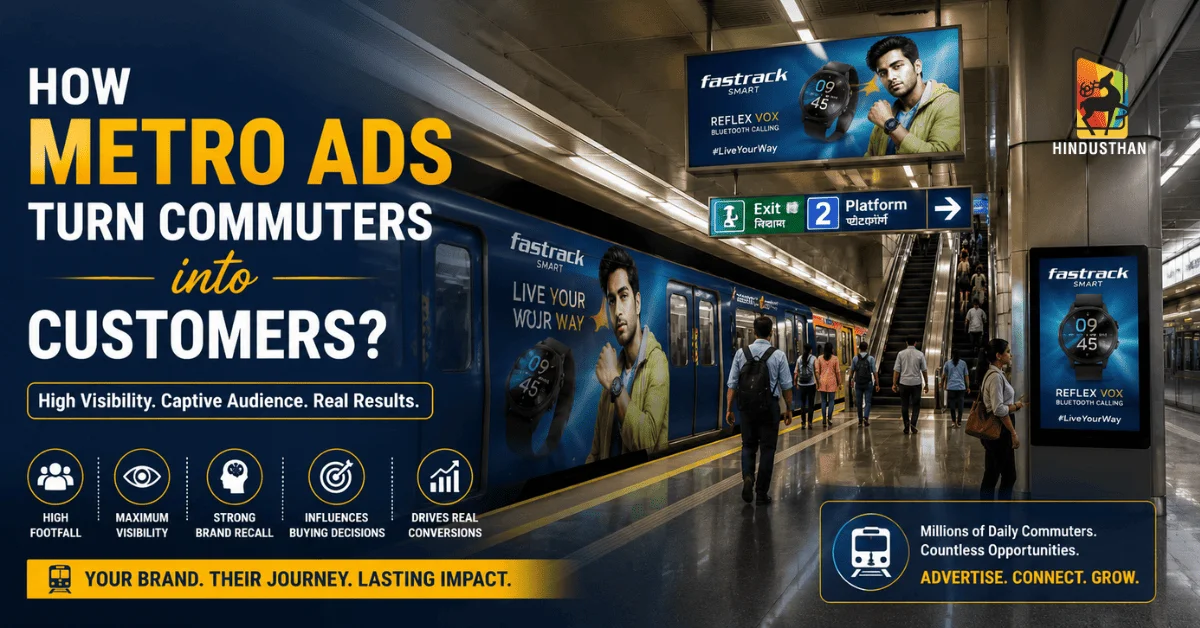
Every day, millions of people travel through metro stations and trains as part of their daily routine. Whether they are heading to work, returning home, shopping, or meeting friends, metro commuters spend a significant amount of time in a highly engaging environment. This is one of the reasons why Metro Advertising has become one of the most effective forms of out-of-home (OOH) marketing.
But what makes Metro Ads so powerful? More importantly, how do they influence people and turn everyday commuters into paying customers?
Let’s explore the psychology, visibility, and marketing advantages behind successful advertising in metro stations.
Why Metro Advertising Captures Attention
Unlike digital ads that can be skipped or blocked, metro advertisements are part of a commuter’s physical environment.
Passengers waiting on platforms, standing near escalators, walking through concourses, or travelling inside metro coaches naturally encounter advertising messages multiple times during their journey. This repeated exposure creates familiarity, which is one of the strongest drivers of consumer trust.
Marketing studies have consistently shown that people are more likely to choose brands they recognize. Metro advertising helps build that recognition through continuous visibility.

The Power of Repeated Exposure
One of the biggest strengths of metro station advertising is frequency.
A commuter travelling the same route five days a week may see the same advertisement dozens of times each month. Even when they are not actively paying attention, the brand message becomes familiar over time.
This phenomenon, often called the “mere exposure effect,” increases the likelihood that consumers will remember a brand when they are ready to make a purchase decision.
For example, a commuter who repeatedly sees a healthcare, education, retail, or real estate advertisement in a metro station may be more likely to consider that brand later when a need arises.
Metro Stations Reach Consumers at Decision-Making Moments
Modern metro stations are not just transportation hubs. They are lifestyle spaces.
Many stations are connected to:
- Shopping centres
- Business districts
- Residential areas
- Educational institutions
- Entertainment zones
- Commercial complexes
This means that advertising in metro stations reaches consumers when they are actively moving through environments where purchasing decisions often happen.
Brands are no longer competing only for attention; they are positioning themselves close to moments of action.
Metro Ads Deliver High Dwell Time
In digital marketing, advertisers constantly struggle with short attention spans.
Metro environments are different.
Commuters spend time waiting for trains, standing on platforms, riding escalators, or travelling inside coaches. This creates valuable “dwell time” during which advertisements receive longer viewing opportunities compared to many other advertising formats.
Large-format branding, station domination campaigns, pillar wraps, digital displays, and platform advertisements benefit from this extended exposure.
The longer people see a message, the more likely they are to remember it.
Building Trust Through Physical Presence
Consumers are exposed to thousands of online advertisements every day. As a result, digital fatigue has become increasingly common.
Physical advertising formats often create a stronger sense of legitimacy.
When people see a brand prominently displayed across a metro station, they often associate it with credibility, scale, and market presence.
This is particularly valuable for sectors such as:
- Healthcare
- Education
- Real Estate
- Banking
- Retail
- Hospitality
- Consumer Products
A visible metro advertising campaign signals that a brand is established and confident in its market position.

Why Metro Advertising Works for Brand Recall
The effectiveness of Metro Ads comes from a combination of factors:
- High daily footfall
- Repeated audience exposure
- Strategic placement
- Longer viewing duration
- Strong visual impact
- Proximity to purchasing environments
Together, these elements help improve brand recall and influence future buying decisions.
When consumers finally need a product or service, they are more likely to remember brands they have seen consistently during their daily commute.
The Future of Metro Advertising
As urban populations continue to grow, metro systems are becoming increasingly important communication channels for brands.
Today’s campaigns are moving beyond traditional posters to include digital screens, interactive media, station branding, train wraps, and integrated transit advertising solutions.
This evolution allows brands to create more engaging experiences while reaching highly targeted urban audiences.
Conclusion
Metro advertising is more than simply placing an advertisement in a busy location. It is about becoming part of a commuter’s daily journey.
By combining visibility, repetition, trust, and strategic placement, Metro Ads help brands stay top-of-mind long after commuters leave the station. That is why advertising in metro stations continues to be one of the most effective ways to build awareness, strengthen brand recall, and ultimately turn commuters into customers.
For brands seeking meaningful engagement in high-footfall urban environments, metro advertising remains one of the most powerful opportunities in modern out-of-home marketing.